
"coffee science"
4000 article(s) found

Fine Coffee Science explains the internal anatomy of fine coffee beans in detail
Coffee bean close-up, coffee bean internal cross-section map of the coffee fruit after the peel of the freshly ripe coffee fruit on the tree, the coffee fruit without the peel, inside two coffee beans with endocarp, silver peel coffee bean coffee fruit internal structure (coffee fruit includes exocarp, mesocarp, pectin layer, endocarp, coffee bean silver skin, endosperm, embryo.) Internal knot of coffee beans

Coffee Basic Knowledge Coffee Popular Science "White Coffee"
White coffee is a Malaysian specialty with a history of more than 100 years. White coffee does not mean that the color of coffee is white, but the use of special Liberica, Arabica and Robusta coffee beans and super skim milk raw materials, after moderate and low temperature roasting and special processing, a large amount of coffee is removed, and the bitterness and sourness produced by high temperature carbon roasting are removed.

Basic knowledge of fine coffee Coffee popular science "white coffee"
White coffee is a Malaysian specialty with a history of more than 100 years. White coffee does not mean that the color of coffee is white, but the use of special Liberica, Arabica and Robusta coffee beans and super skim milk raw materials, after moderate and low temperature roasting and special processing, a large amount of coffee is removed, and the bitterness and sourness produced by high temperature carbon roasting are removed.

Coffee Science Popularization of "White Coffee" Coffee basic knowledge
White coffee is a native product of Malaysia with a history of more than 100 years. White coffee does not mean that the color of coffee is white, but uses high-grade Liberica, Arabica and Robusta coffee beans and super skimmed cream raw materials to remove a large number of coffee after moderate and mild low temperature roasting and special processing, remove the bitter and sour taste produced by high temperature carbon roasting, and remove the bitter taste of coffee.

Coffee Science Popularization of White Coffee Fancy Coffee basic knowledge
White coffee is a native product of Malaysia with a history of more than 100 years. White coffee does not mean that the color of coffee is white, but uses high-grade Liberica, Arabica and Robusta coffee beans and super skimmed cream raw materials to remove a large number of coffee after moderate and mild low temperature roasting and special processing, remove the bitter and sour taste produced by high temperature carbon roasting, and remove the bitter taste of coffee.

Coffee novice science article: freshly ground coffee is not instant coffee
The coffee powder grinded by roasting coffee beans cannot be completely dissolved in water, of course, you can also brew it directly with coffee cups and hot water, but only if you can tolerate the coffee grounds in this mouth, otherwise, it is recommended to refer to the following figure for the following basic coffee utensils and usage. (PS: the temperature indicated by hand flushing in the picture is suitable for light coffee beans.) -
Fine Coffee Science explains the Preservation of Coffee
There is a knack for distinguishing the freshness of coffee beans: fresh coffee beans smell fragrant, otherwise they are tasteless or have a bad smell. Look at it: good coffee beans are complete in shape and full in size. On the contrary, the shape is incomplete. Hand pressure: fresh coffee beans are fresh and crisp, and the fragrance comes out when they crack. Color: dark black coffee beans, the brewed coffee has a bitter taste; yellow coffee beans

Coffee novice science article freshly ground coffee is not instant coffee
The coffee powder grinded by roasting coffee beans cannot be completely dissolved in water, of course, you can also brew it directly with coffee cups and hot water, but only if you can tolerate the coffee grounds in this mouth, otherwise, it is recommended to refer to the following figure for the following basic coffee utensils and usage. (PS: the temperature indicated by hand flushing in the picture is suitable for light coffee beans.) -

Coffee Science Popularization of "White Coffee"
White coffee is a native product of Malaysia with a history of more than 100 years.
Fine Coffee Science explains the structure of coffee beans in detail
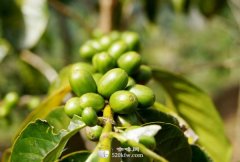
Usually there are two seeds in a coffee fruit, but after picking, there is often only one seed in about 5-10% of the berries, because there is only one ovule fertilized in the ovary, and the bean grows up to be nearly oval in shape. it's also known as the little round bean. This coffee bean will be smaller than normal Arabica coffee beans and taste like ordinary coffee beans.

Coffee beans in the macro picture of boutique coffee science
Brazil Yellow bourbon Coffee Bean [Bourbon, Brasil] Nepal Siyangjia Himalayan Snow Coffee Bean [Syanja,Nepal] Colombia Miaolinglong Coffee Bean [Narino, Columbia]
Coffee science
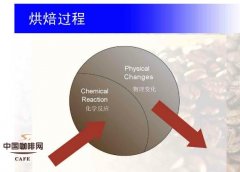
There are a variety of small rules for roasting and extracting raw coffee beans. The big law formed by the combination of these small rules is systematic caffeine.

Science proves: 13 reasons why you should drink more coffee
Coffee is a very healthy food. It is rich in antioxidants and vitamins that are good for health. Research shows that people who use coffee are less likely to suffer from specific diseases.

Science proves: 13 reasons why you should drink more coffee
Coffee is a very healthy food. It is rich in antioxidants and vitamins that are good for health. Research shows that people who use coffee are less likely to suffer from specific diseases.
Coffee popular science knowledge caffeine Caffeine
As a natural insecticide, caffeine can be found in the fruits, leaves and seeds of more than 60 plants. Caffeine can paralyze insects that feed on these plants and achieve insecticidal effect. Pure caffeine is a white, strongly bitter powder. It is an alkaloid extracted from tea and coffee fruits. Moderate use of caffeine can dispel fatigue and excitatory nerves.

Ingredients of boutique coffee beans popular science caffeine Caffeine
As a natural insecticide, caffeine can be found in the fruits, leaves and seeds of more than 60 plants. Caffeine can paralyze insects that feed on these plants and achieve insecticidal effect. Pure caffeine is a white, strongly bitter powder. It is an alkaloid extracted from tea and coffee fruits. Moderate use of caffeine can dispel fatigue and excitatory nerves.
No matter how good you are, the "Science" coffee machine can handle it.
In fact, this is a prototype design of a coffee machine, which is said to meet the technical requirements of the most awesome coffee makers. This set of laboratory Espresso coffee machine (Laboratory Espresso Machine) was designed by Israeli designers David Budzik and Adi Schlesinger. The design aesthetics is derived from the chemical laboratory, and of course it also uses the scientific principles of coffee production.